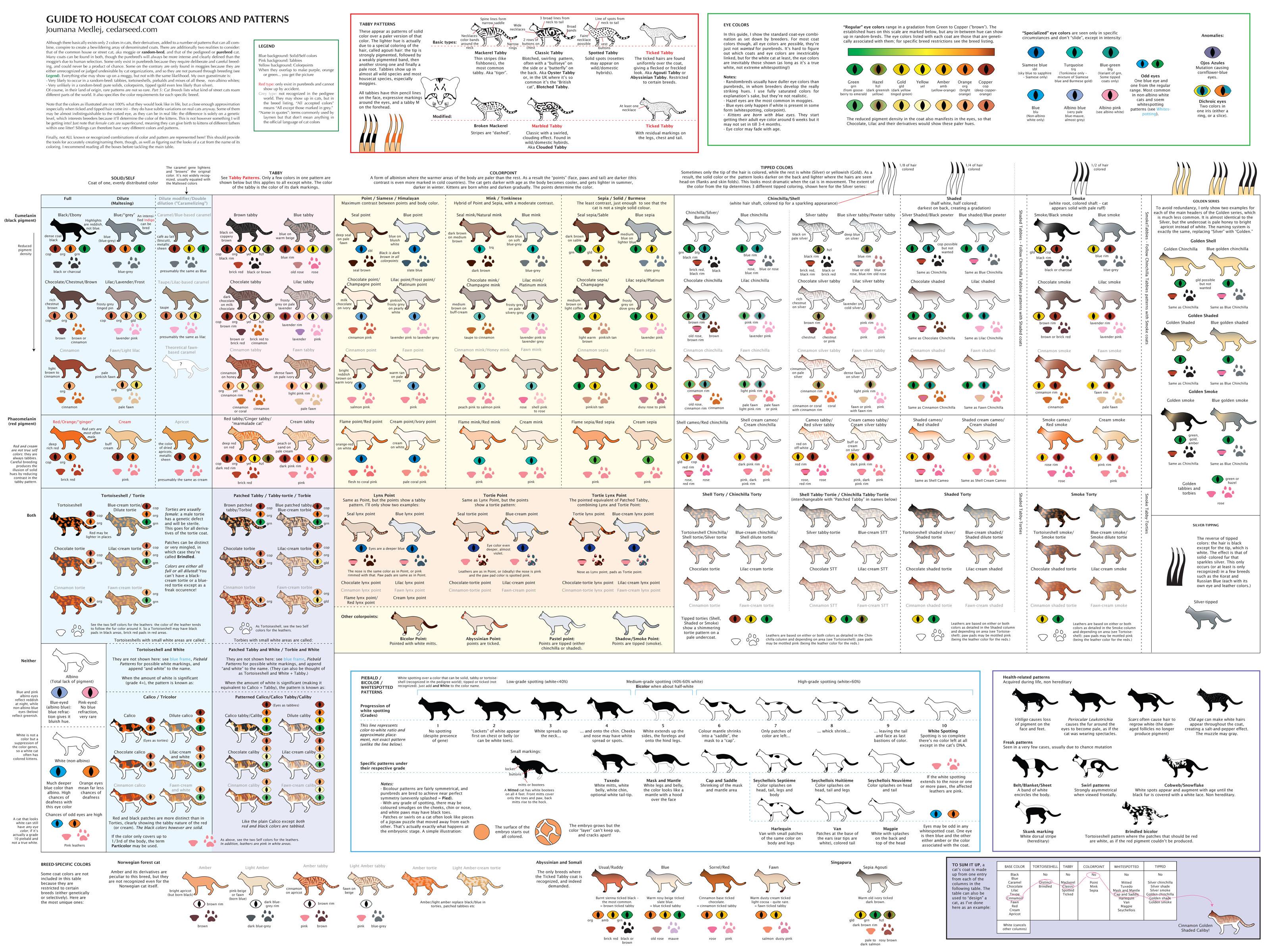
The illustration below is for reference purposes only and shows general coat colors and patterns found in cats. Please note that not all variants presented occur in Siberian cats or are permitted in breeding conducted in accordance with the WCF (World Cat Federation) standard.
Source: Joumana Medlej, cedarseed.com
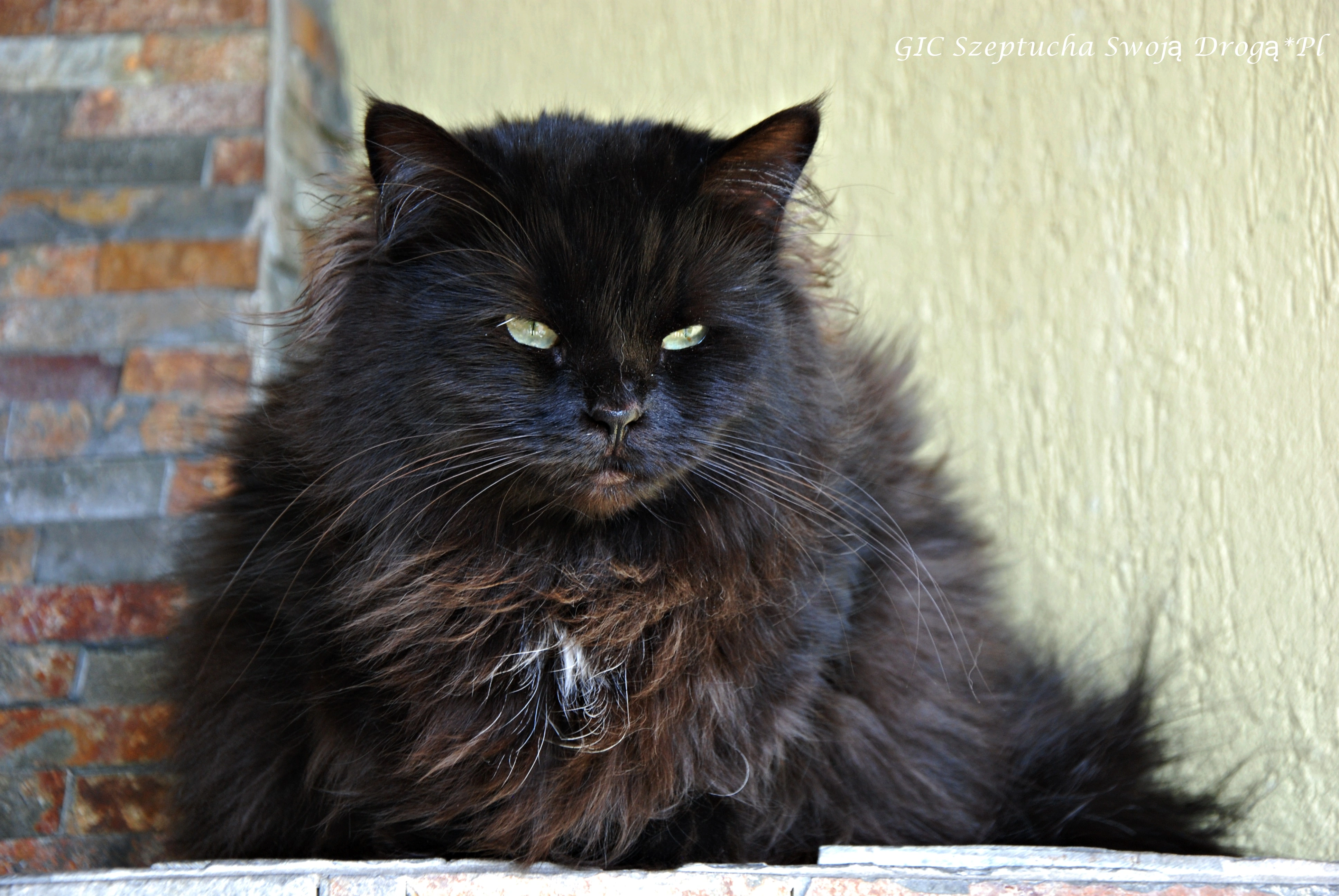
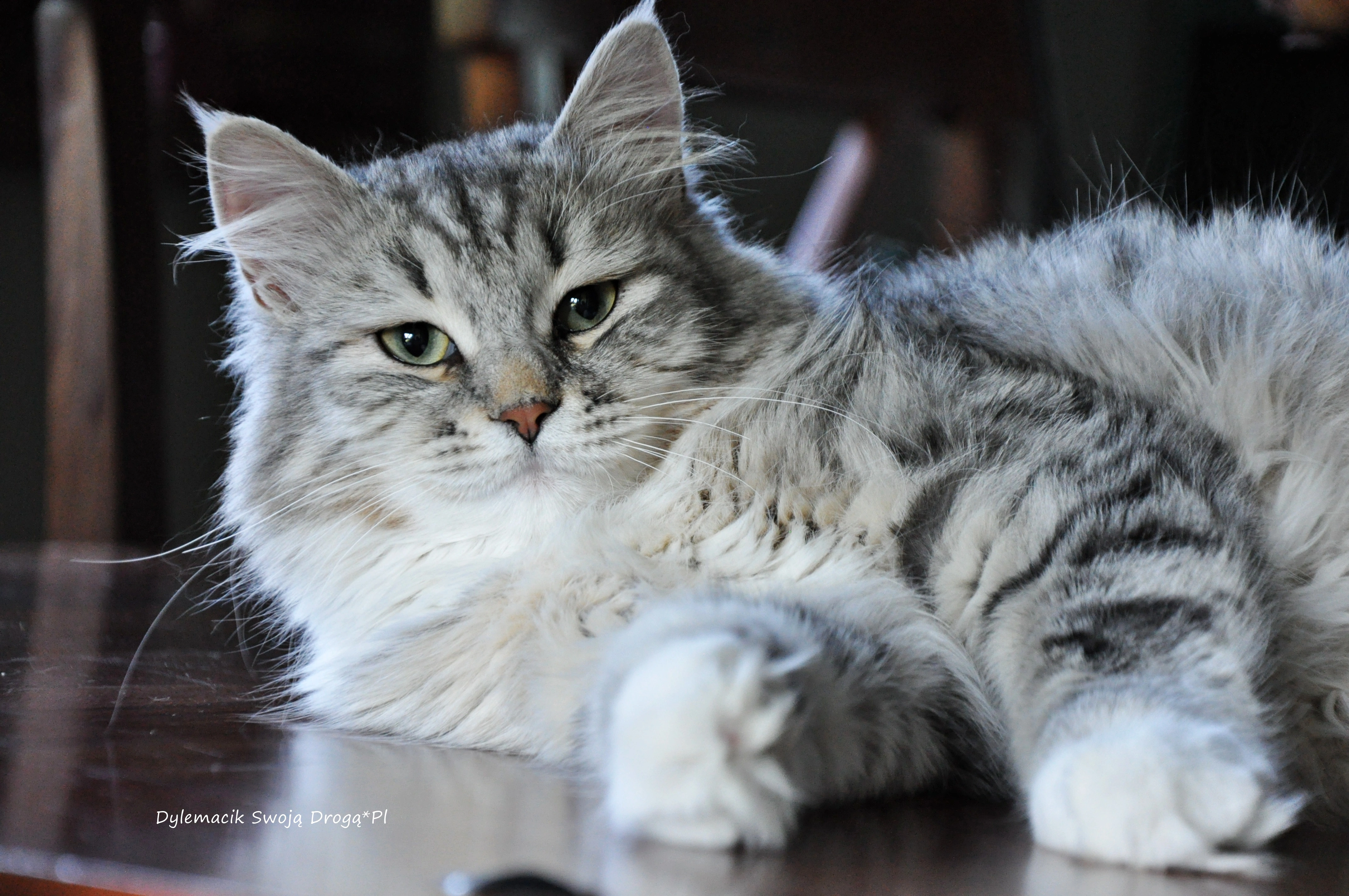
The Siberian cat occurs exclusively in natural colors and patterns.
Base colors:
n – black
a – blue
d – red
e – cream
Tabby patterns:
21 – unspecified tabby (agouti)
22 – classic tabby (marbled)
23 – mackerel tabby
24 – spotted tabby
silver (s), golden (y) and smoke, e.g. ns, ds
colorpoint variety – Neva Masquerade (33) (always with blue eyes)
In the EMS (WCF) system, bimetal coloration is marked with the letter “u” as a modifier of the silver variety.
Correct notations:
SIB nsu – black silver bimetal
SIB asu – blue silver bimetal
Explanation:
n / a – base color
s – silver
u – bimetal
The letter “u” does not replace silver, but further specifies it.
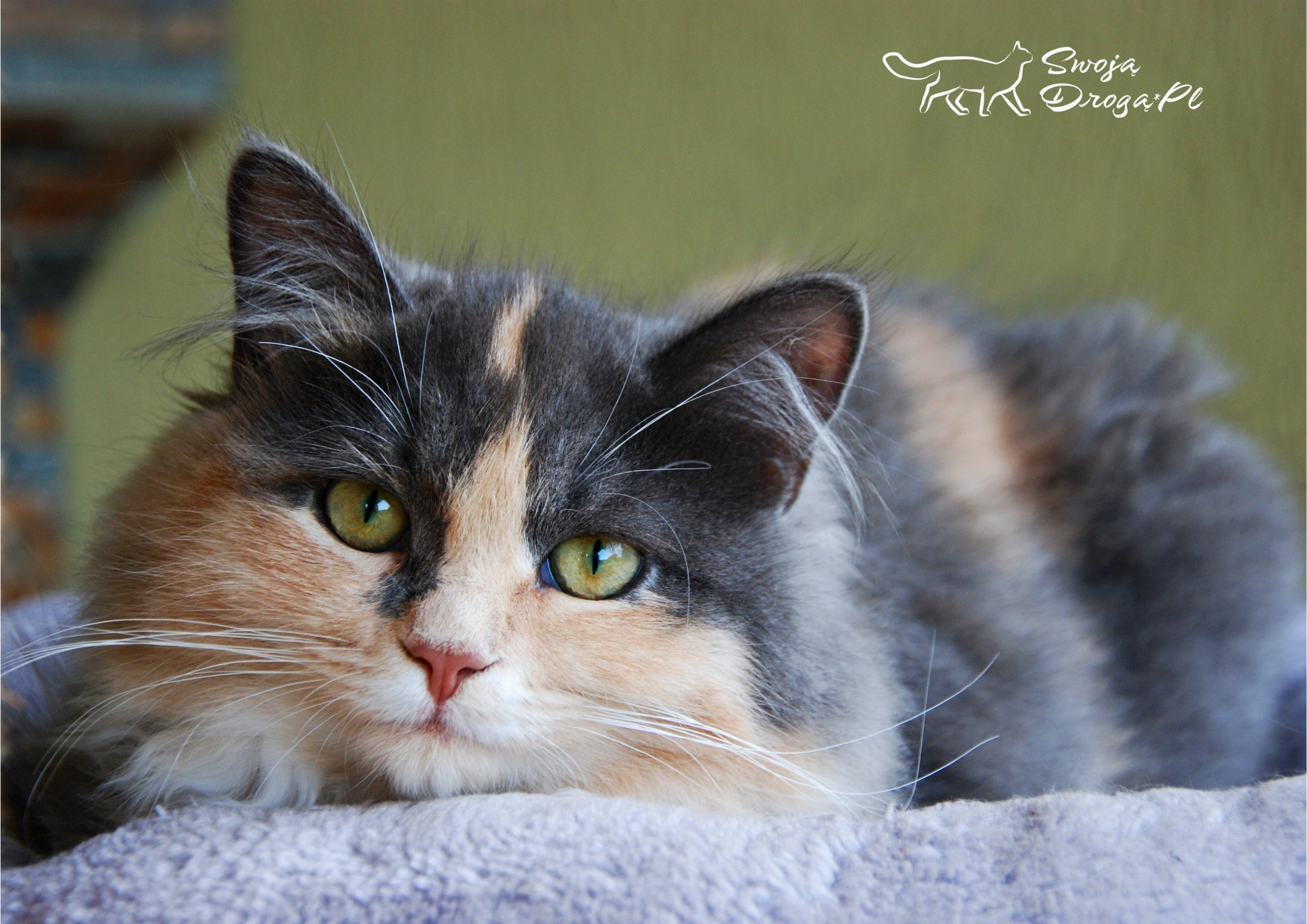
Tortoiseshell coloration occurs almost exclusively in females, due to genetic factors. Male tortoiseshell cats are extremely rare and are usually infertile.
f – black tortoiseshell (black + red)
g – blue tortoiseshell (blue + cream)
Colors appear in irregular patches. Tortoiseshell can occur:
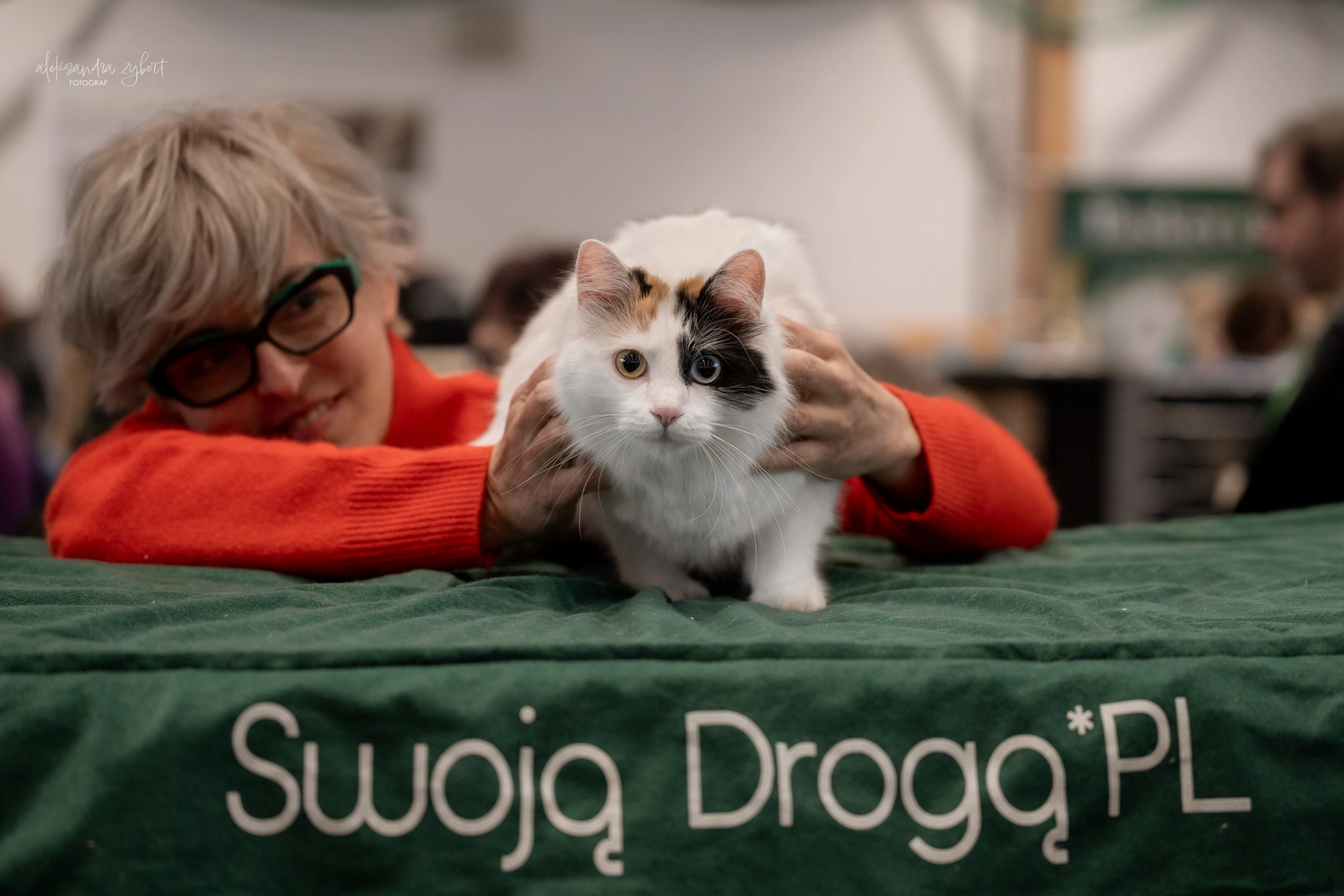
without white or with white (calico)
with or without tabby pattern
Silver, smoke, and bimetal tortoiseshells (e.g. fsu, gsu) are also possible, provided they meet the general requirements of the breed standard.
The WCF standard allows white in various proportions:
01 – van → approx. 75–90% white
The body is almost entirely white; color appears mainly on the head (patches near the ears) and the tail.
02 – harlequin → approx. 50–75% white
White predominates, with color appearing in larger patches on the body, head, and tail.
03 – bicolor → approx. 25–50% white
White and color are more balanced; often a white chest, belly, paws, and part of the face.
09 – small amount of white → up to approx. 25% white (often 1–10%)
Minor markings such as white socks, a locket, or a small patch on the chest or belly.
Neva Masquerade (33) – the colorpoint variety of the Siberian cat, always with blue eyes; any amount of white is permitted under the WCF standard.
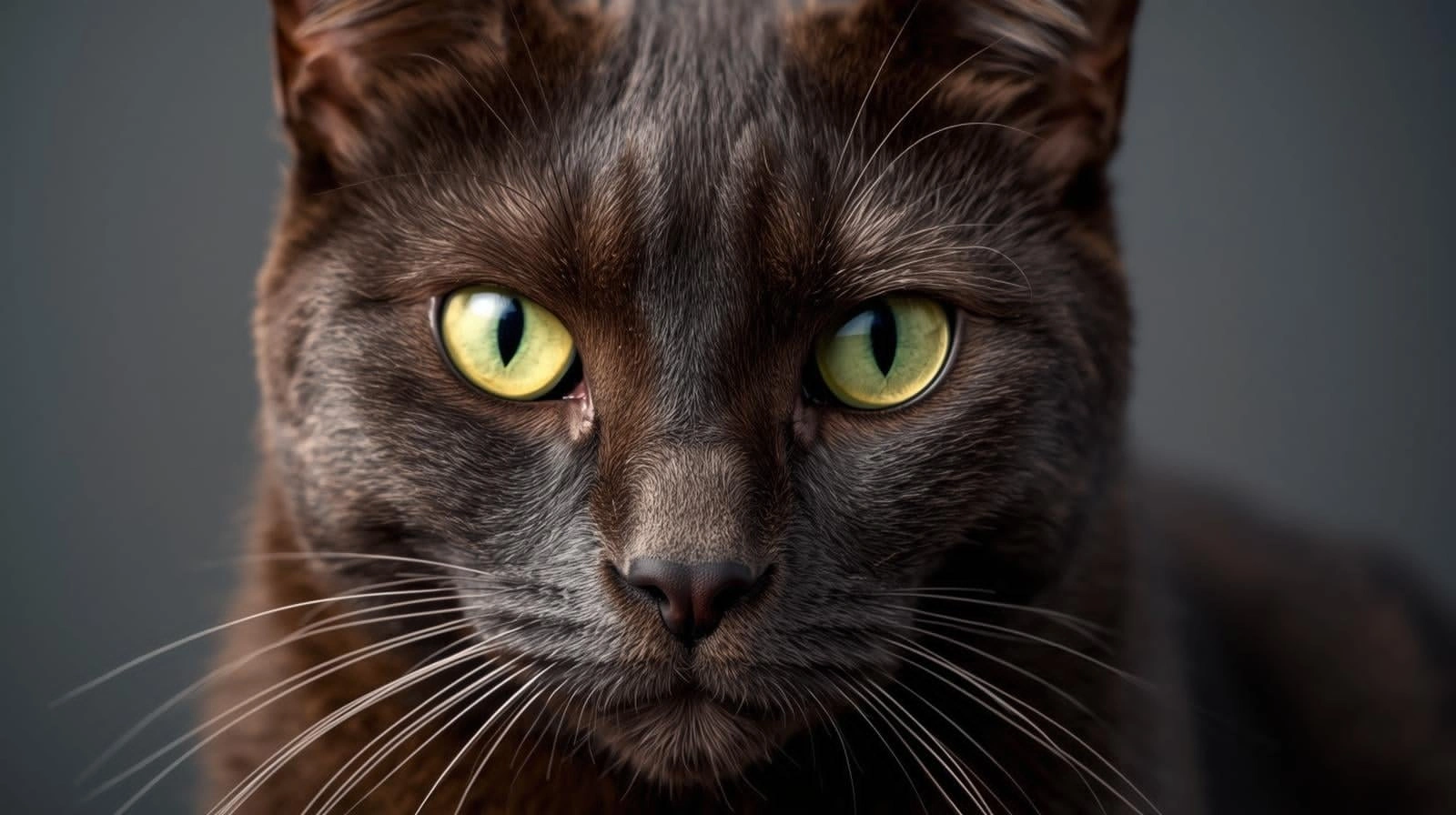
The following colors do not occur in Siberian cats and are not permitted for breeding:
b – chocolate
c – lilac
o – cinnamon
p – fawn
Although these colors appear in general cat color charts, they do not apply to the Siberian breed.
In traditional Siberian cats, eye color is most commonly green, gold, or copper.
Neva Masquerade (colorpoint) cats always have blue eyes.
Siberian cats with a large amount of white (EMS 01, 02, 03) may have blue or odd-eyed eyes, which is fully compliant with the WCF standard.
No.
The following do not occur and are not permitted in Siberian cats:
EMS 25 – ticked tabby (known e.g. in Abyssinian cats)
EMS 11 – shaded
EMS 12 – shell / chinchilla
These are tipped coat types, characteristic of breeds such as Persians or British cats, but not recognized in the WCF standard for the Siberian breed.
g 09 blue tortie solid with white
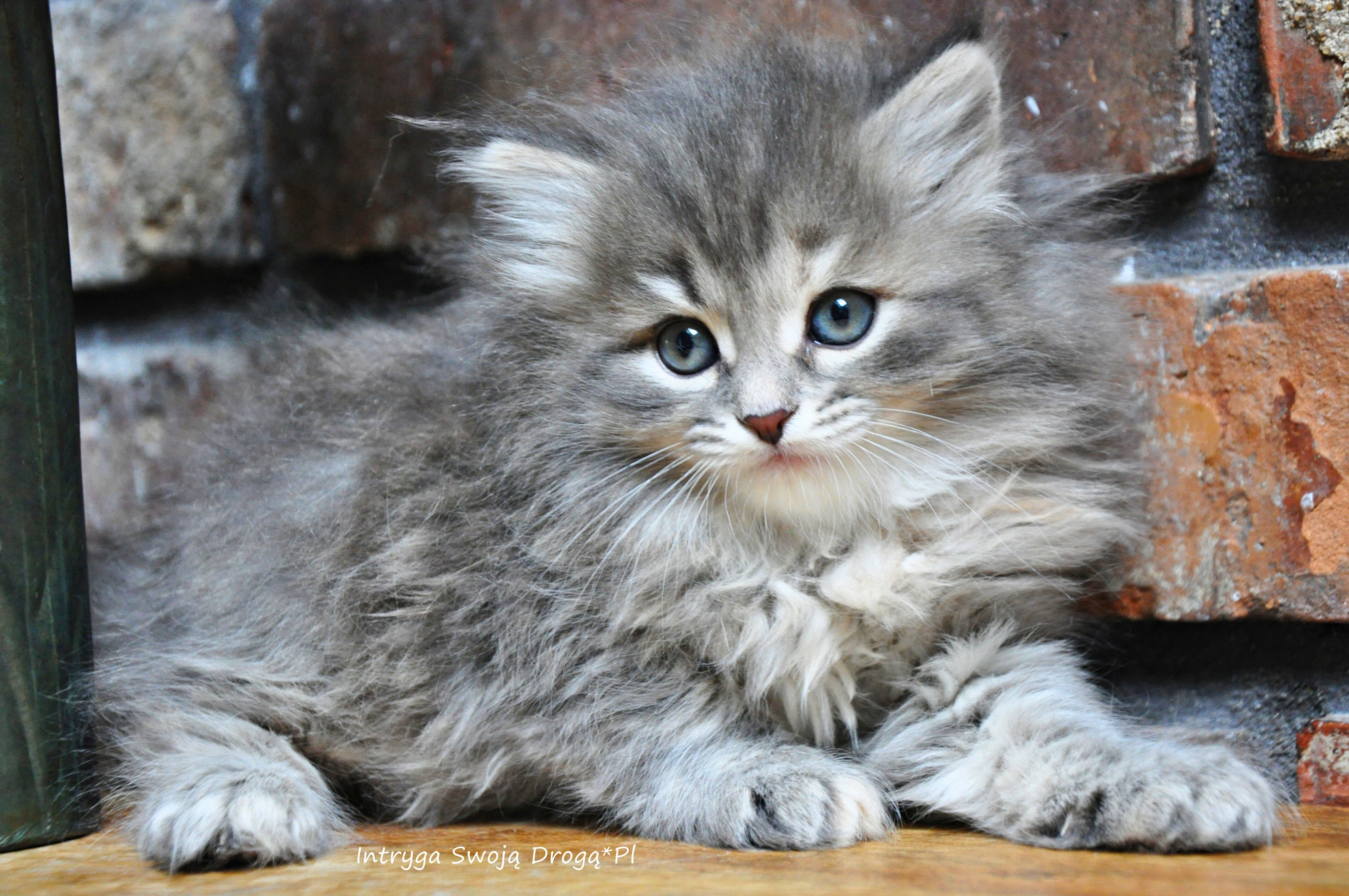
a 24 blue spotted tabby
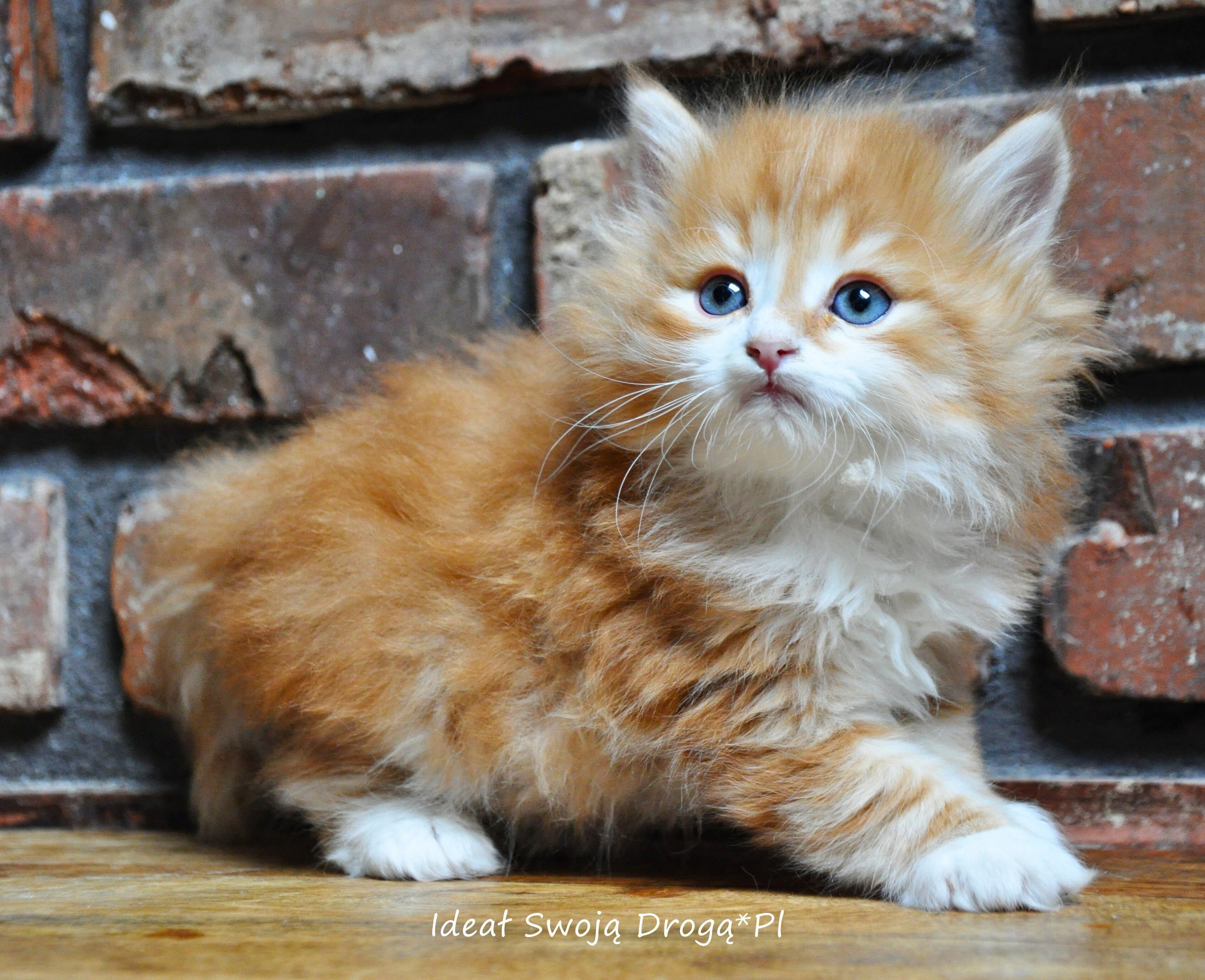
d 09 22 red with white classic tabby
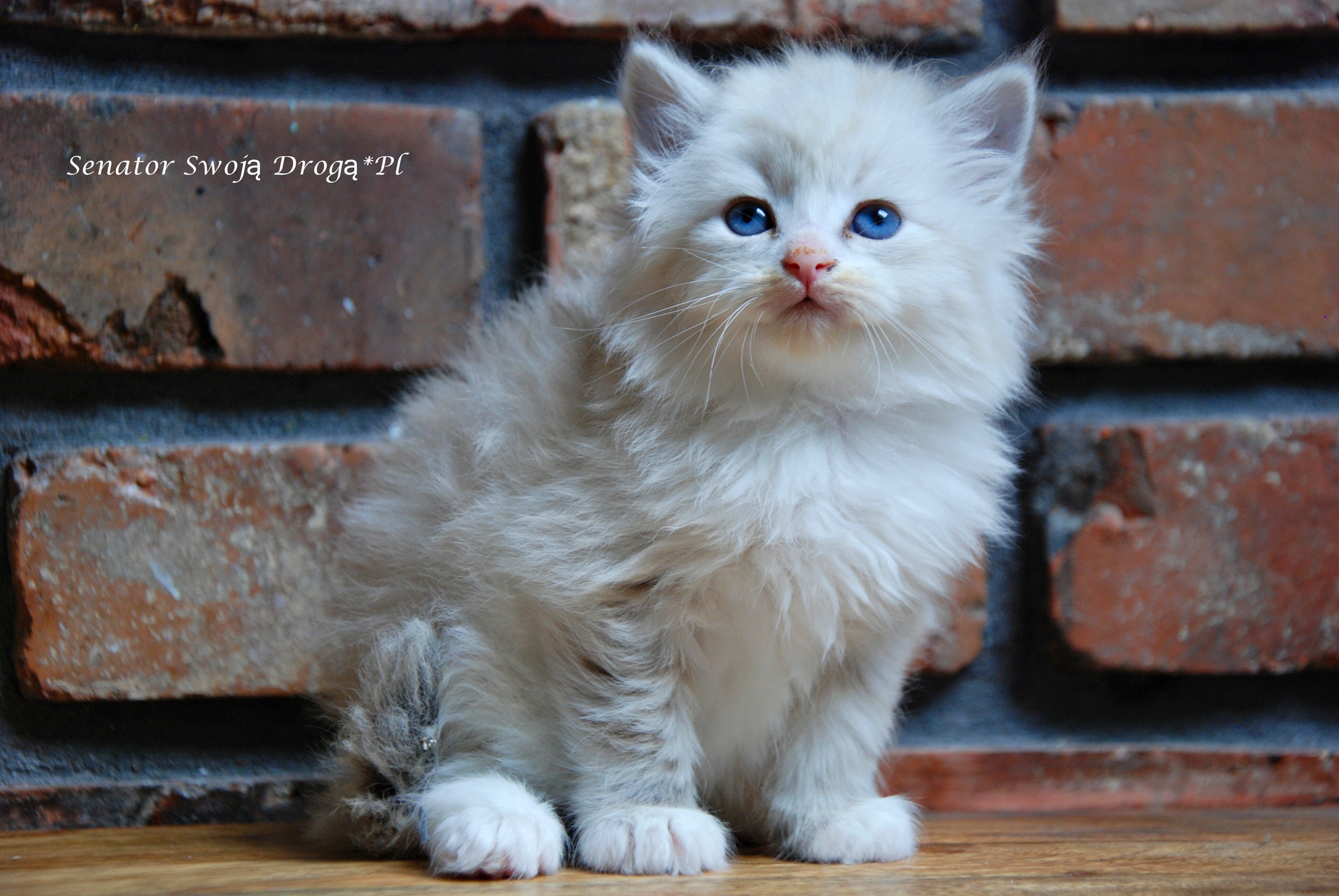
ns 03 21 33 – black silver bicolor tabby colorpoint
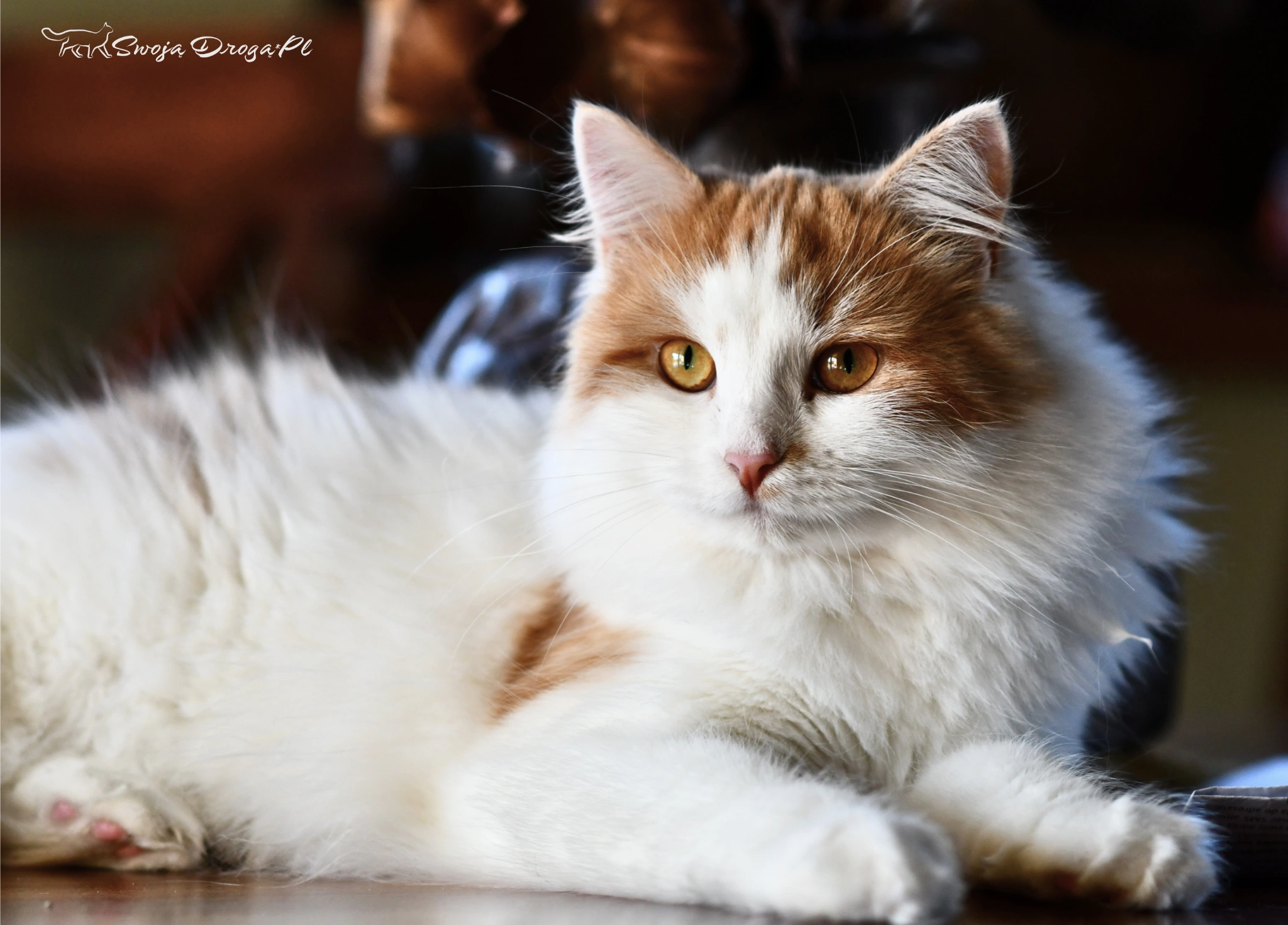
d 02 – red solid harlequin
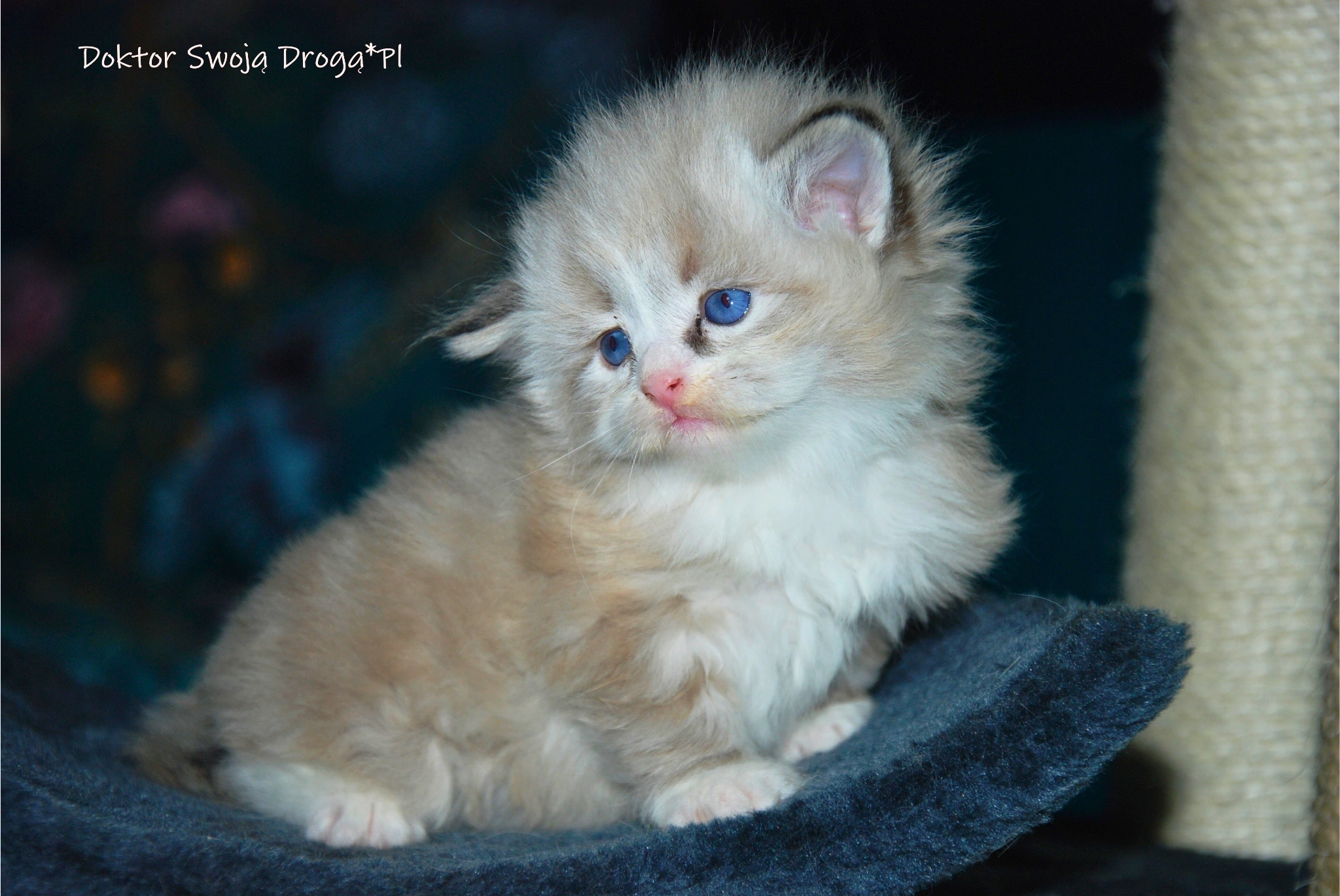
n 09 33 – black colorpoint with white
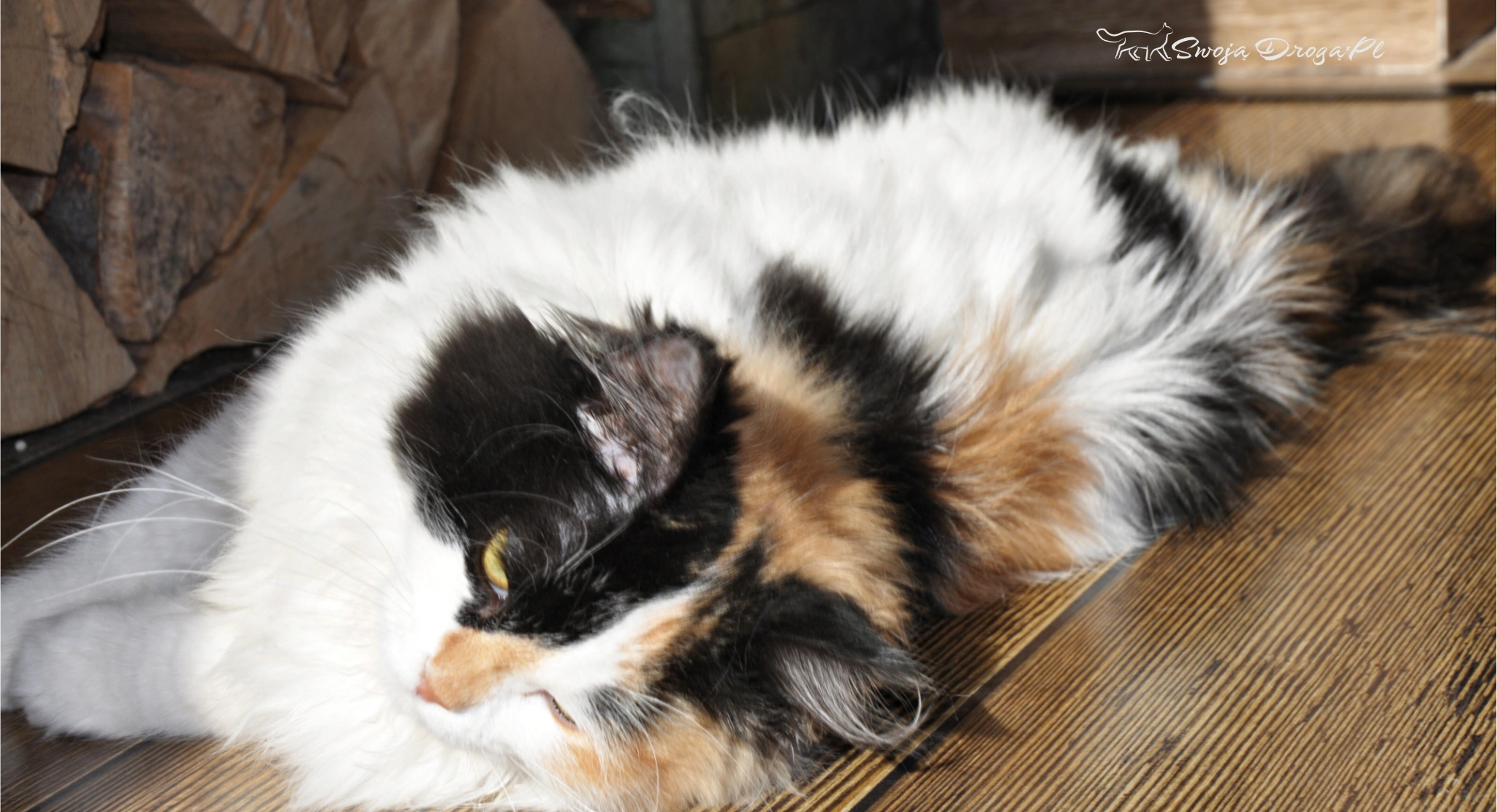
f 02 – black tortoiseshell solid harlequin
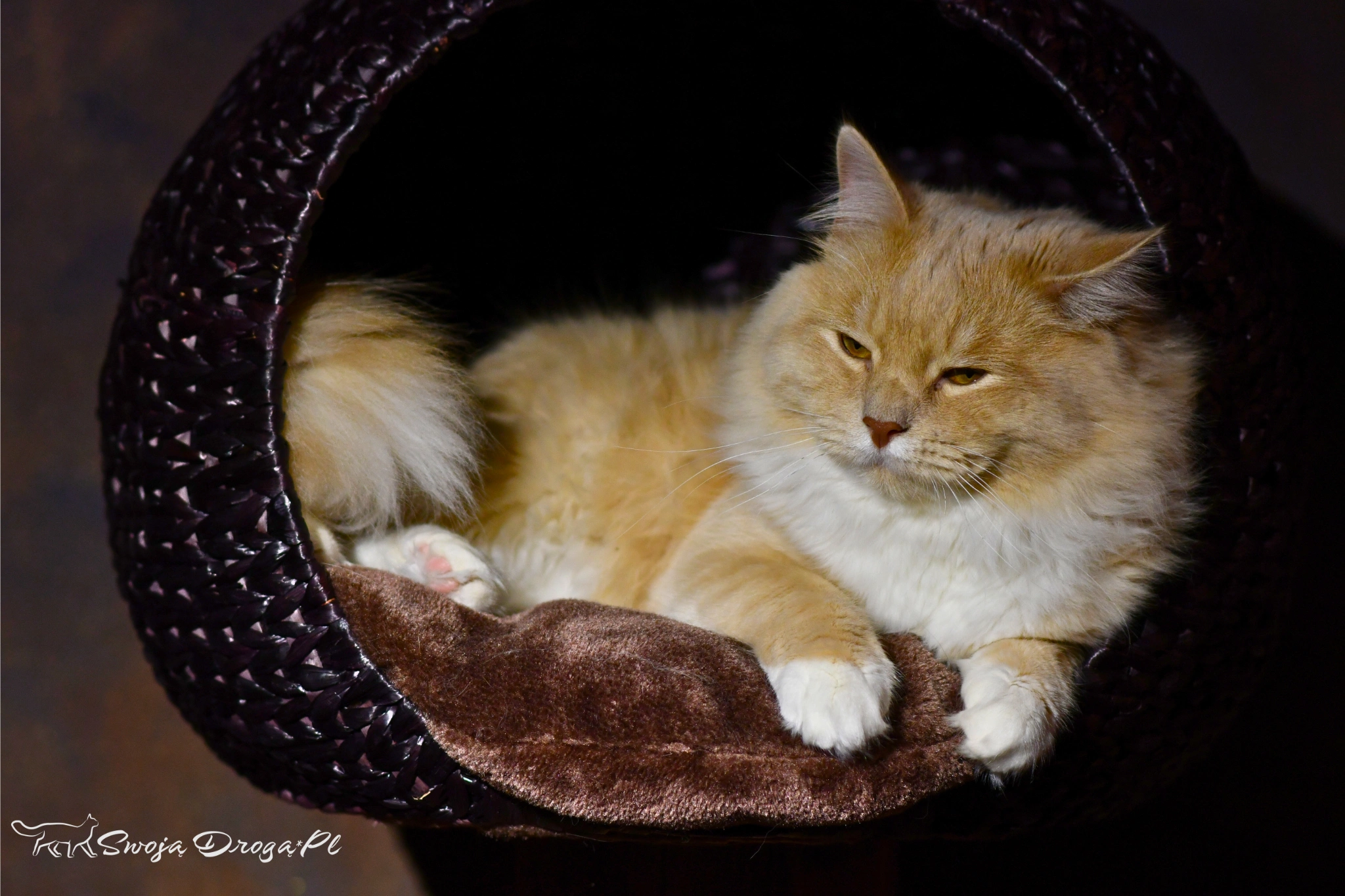
e 09 – cream solid with white
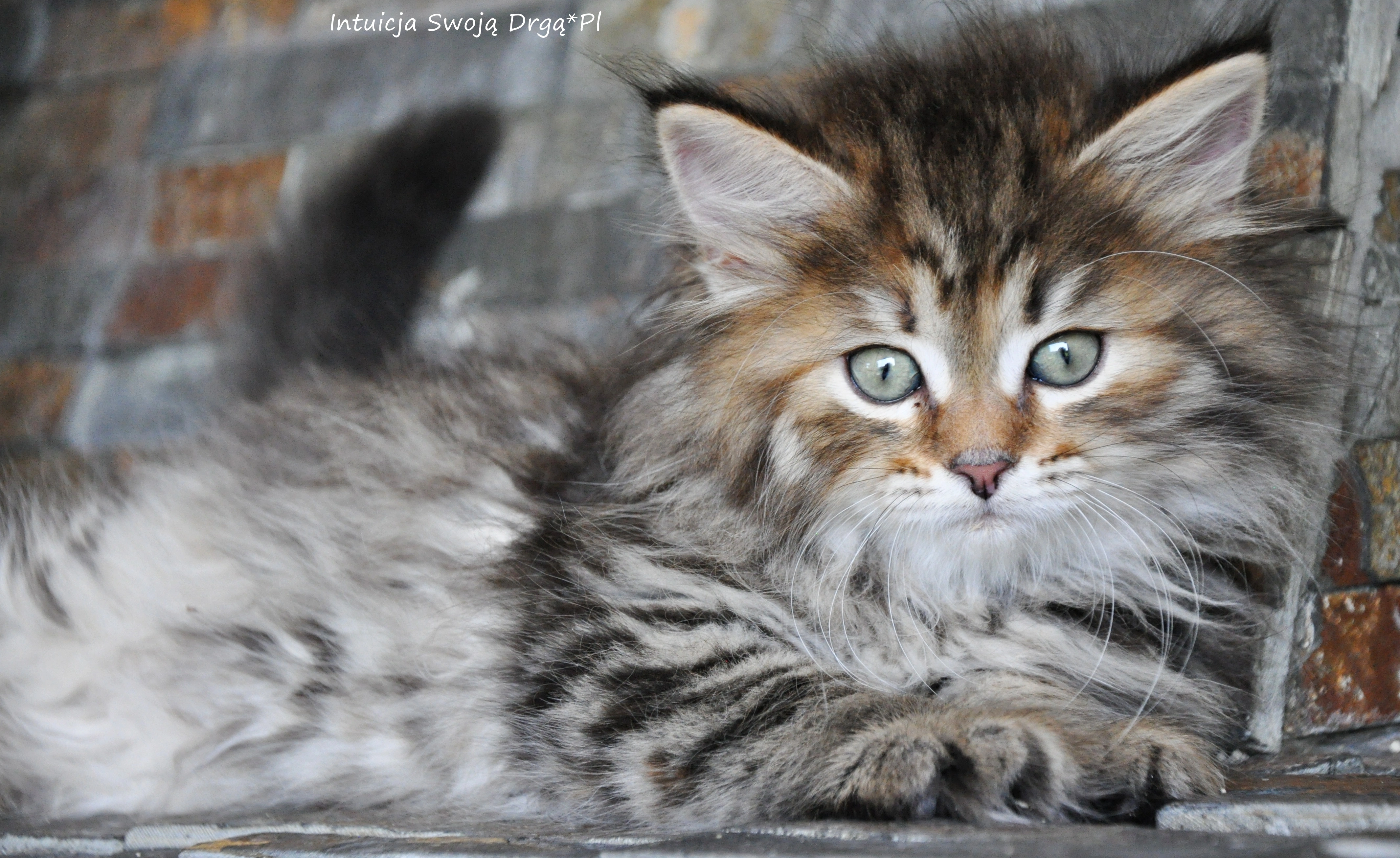
f 24 – black tortoiseshell spotted tabby
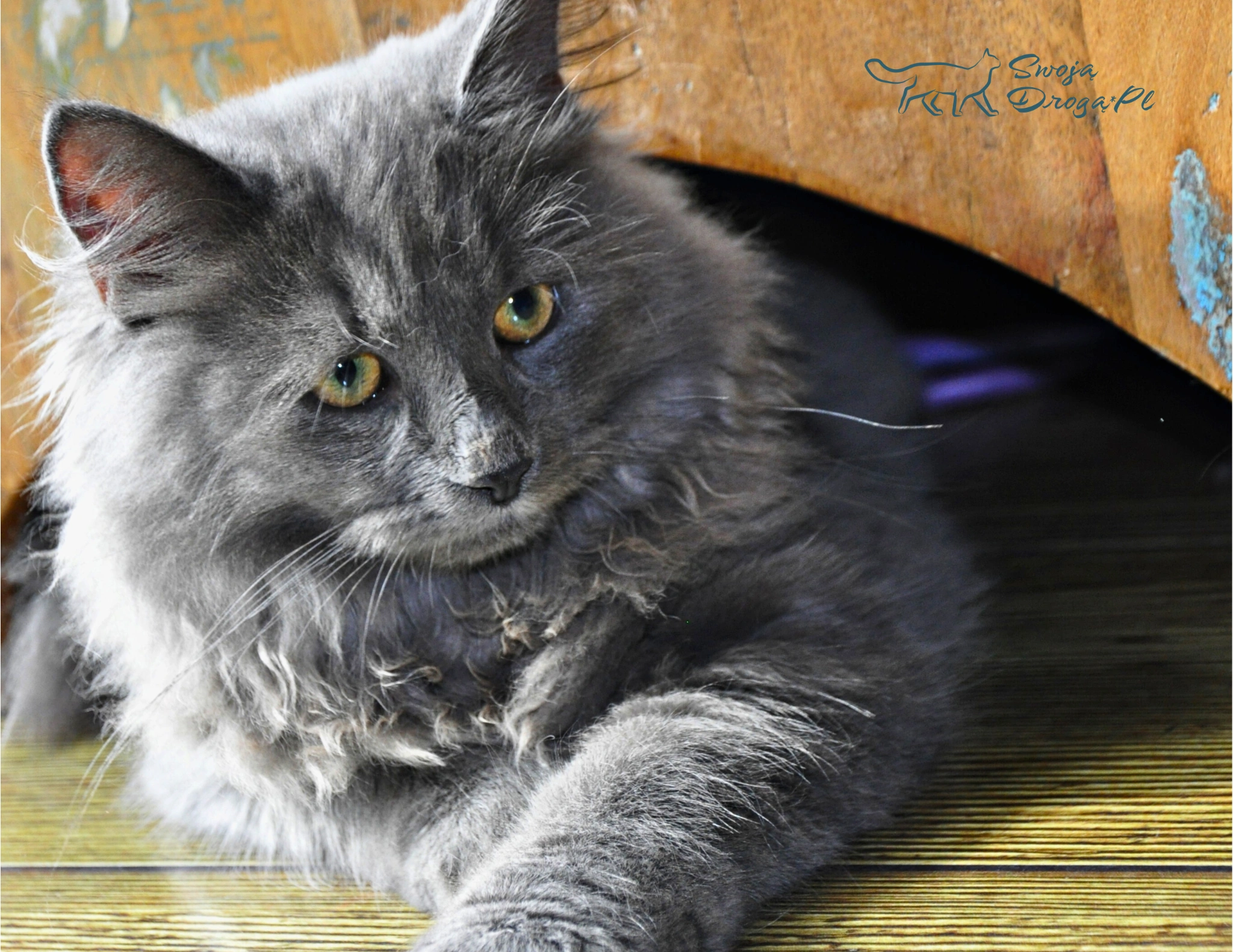
a blue
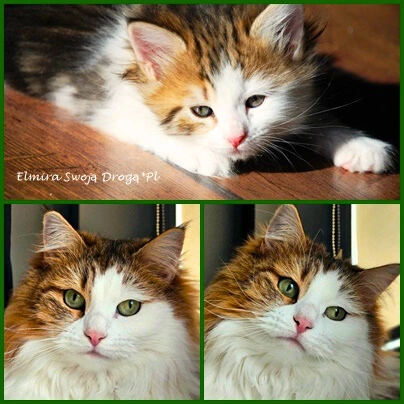
ny 03 22 – black golden bicolor classic tabby
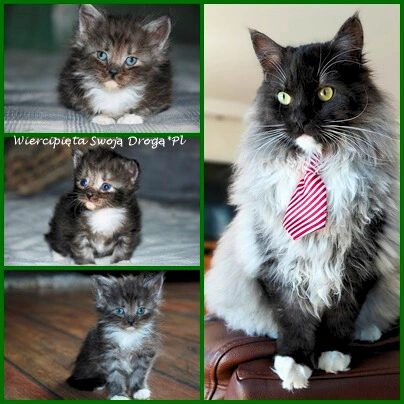
ns 09 – black silver with white
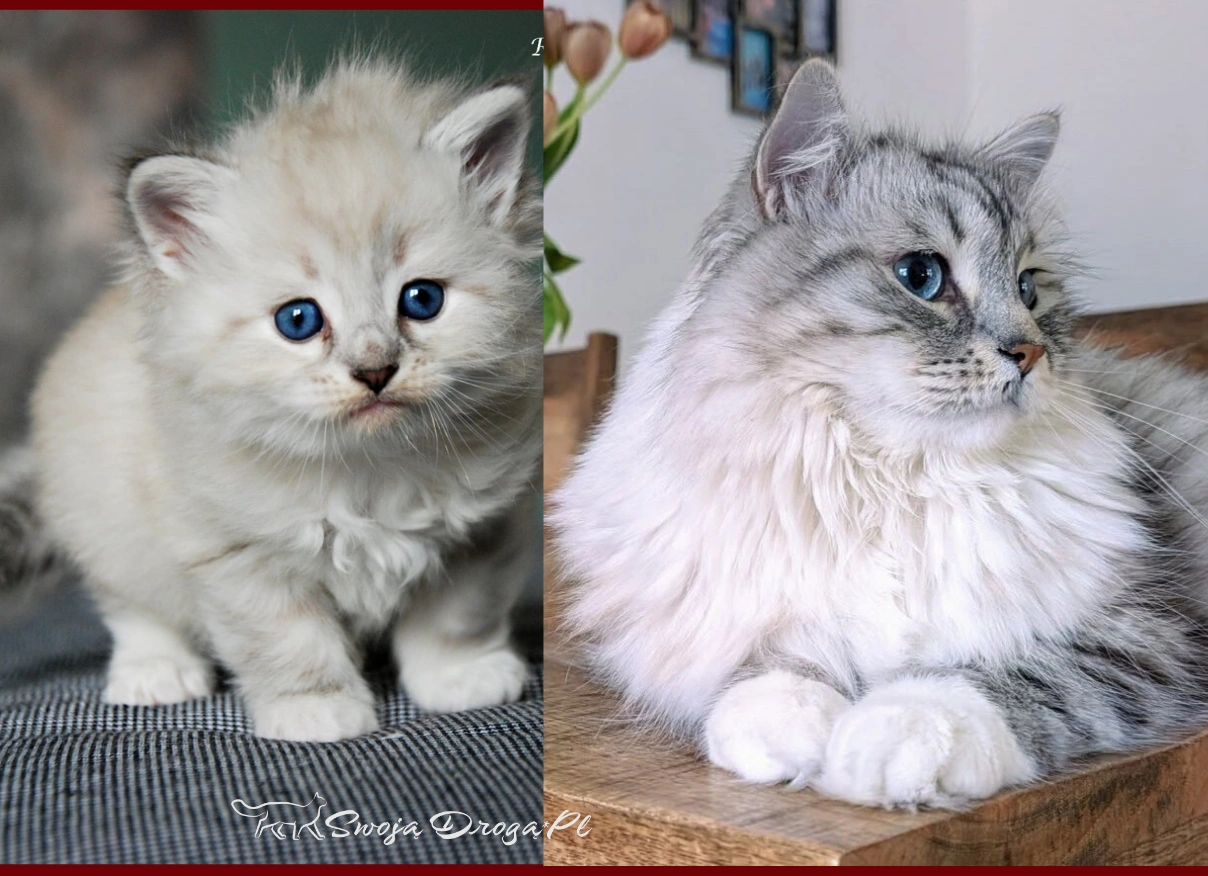
ns 03 21 33 – black silver bicolor tabby colorpoint
(at 1 month of age and after full color development at 1.5 years of age)
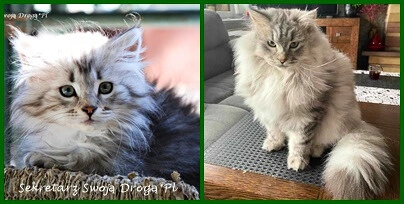
ns 09 22 – black silver with white classic tabby
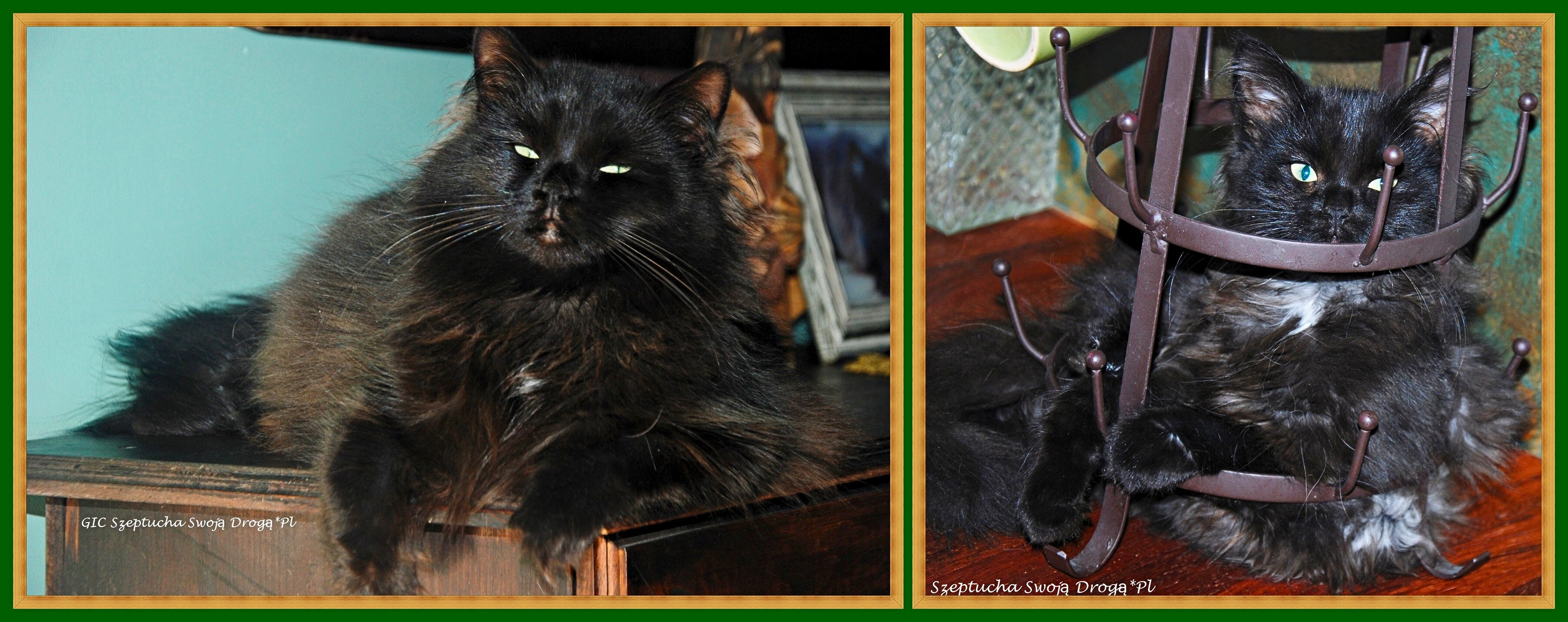
n 09 – black solid with white
The illustration is educational and helps explain the basics of feline coat color genetics; however, not all variants shown apply to Siberian cats. All cats in our cattery comply fully with the WCF breed standard, both in terms of coat color and eye color.